
Local Law 11 Facade Repair in NYC That Closes Out Your FISP Report
Your QEWI has filed, the conditions are on record and the clock is running. As a licensed and insured facade repair contractor, we take the whole report, from cracked brick and loose stone to failed sealant and rusted railing anchors, and turn it into finished work your inspector can sign off on.
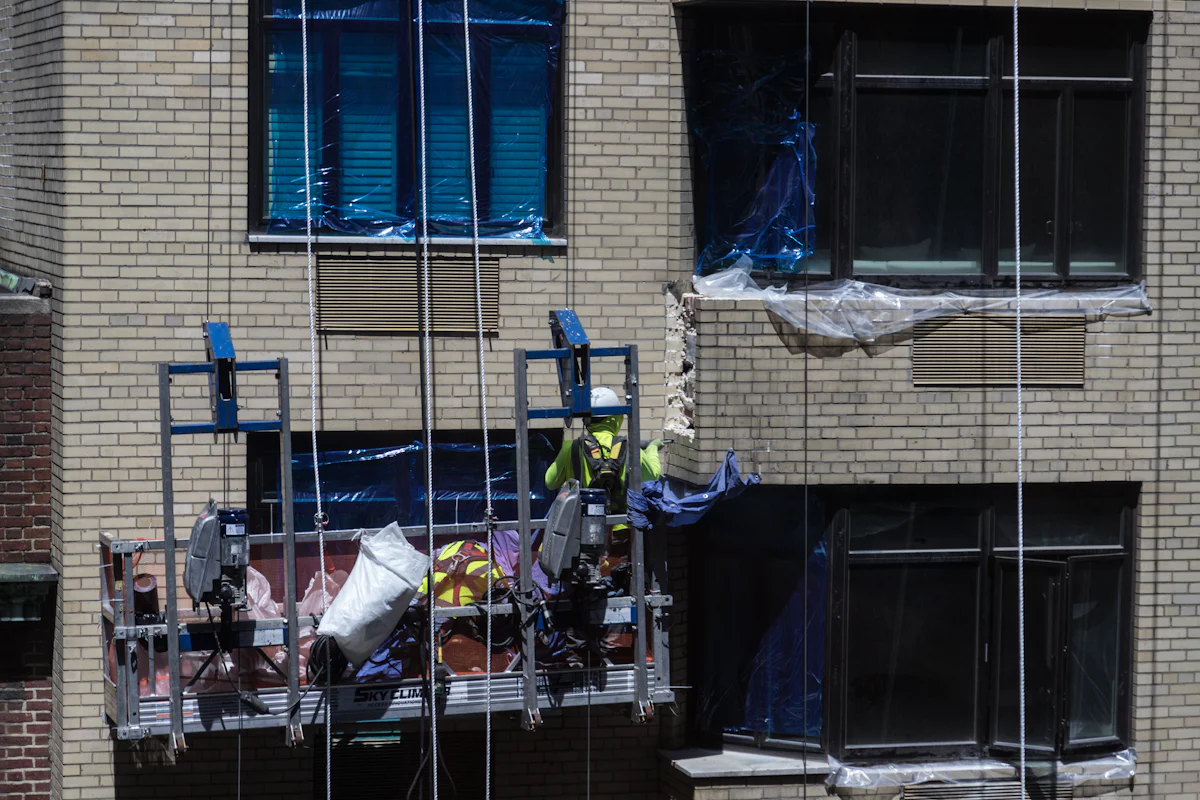
What Local Law 11 Facade Repair Covers
Local Law 11 facade repair is the work that follows a FISP critical examination. Once a Qualified Exterior Wall Inspector rates conditions SWARMP or Unsafe, the owner has to correct them, and the fix has to address the underlying cause rather than hide it. A patch over a crack that keeps moving does not count, because DOB treats a condition repaired twice in the same cycle as unsafe.
The timeline depends on the rating. Every Unsafe condition has a 90 day correction window that opens on the filing date, DOB can grant extra time in blocks of up to 90 days, and the QEWI must inspect the finished work within two weeks before filing an amended report. SWARMP conditions need to be fixed before the next cycle, when the QEWI certifies each correction. Anything still open by then gets reported as Unsafe and carries a $2,000 civil penalty.
| What the Report Says | What We Do |
|---|---|
|
Cracked or displaced brick at window heads |
Remove the brick above the opening, replace the corroded steel lintel, flash it and rebuild the masonry |
|
Open or deteriorated mortar joints |
Rake joints to sound mortar and repoint using mortar matched to the original in strength and color |
|
Spalled or loose stone units |
Remove loose material, then patch, pin or replace the stone so it is anchored back to the wall |
|
Cracked terra cotta with exposed anchors |
Clean and coat the steel, fill or replace the unit and seal the joints against water entry |
|
Failed sealant at windows and panel joints |
Cut out the old sealant, install backer rod and apply a compatible sealant sized to the joint |
|
Loose railing or corroded fire escape anchors |
Reset or replace anchors, repair the masonry around them and test that the railing holds |
Reading Your FISP Report as a Repair List
Inspectors write in technical shorthand. Here is how common report entries translate into work on the wall.
Why Facade Conditions Keep Coming Back
Most facade damage in the city traces to three slow processes. Repairs only hold when they stop the process, not just the symptom.
Water Getting Behind the Face
Water that enters through failed joints, cracked copings or open parapets soaks the masonry and the steel buried inside it.
Freeze and Thaw Cycles
Trapped moisture expands each time it freezes, prying brick faces loose and widening cracks from one winter to the next.
Rusting Steel Inside the Wall
Lintels, shelf angles and anchors grow as they corrode, pushing masonry outward and cracking stone and terra cotta from within.
How We Carry Out Local Law 11 Repairs
Verify Every Condition on Site
Our team checks each report item from the scaffold or rigging, confirms the extent of damage and flags anything the scope needs to cover before pricing.
Build the Scope and File Permits
Every item is assigned a repair method and a measured quantity, and we file for the DOB work permit and sidewalk protection the job requires.
Repair Elevation by Elevation
Crews work one face of the building at a time, so finished areas can be closed out while work moves to the next elevation.
Document for the QEWI
Before, during and after photos, product sheets and daily logs are sent to your inspector so the amended report can be filed without delay.
Every Facade Trade Under One Repair Scope
A single FISP report often lists masonry, steel, stone and sealant work on the same elevation. Pricing and sequencing it as one job keeps crews from waiting on each other and avoids paying for access twice.
Repointing, brick replacement and rebuilding bulged or cracked wall sections.
Corroded steel removed and swapped for new, with flashing that keeps water off it.
Loose or spalled units pinned, patched with matched mortar or replaced.
Cracked ornament repaired or recast and heavy cornices secured back to the frame.
Joints and Sealants
Window perimeters, panel joints and copings resealed with compatible products.
Slab edges, guardrails and anchors repaired so each balcony meets the code again.
Access, Sheds and Permits Handled From the Start
Scaffold and Rigging
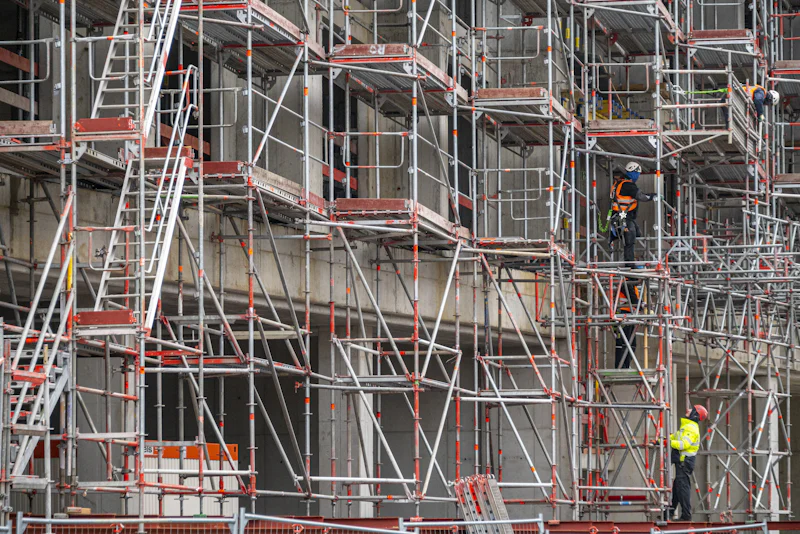
Pipe scaffold, suspended platforms or rope access chosen to reach every report location on the elevation safely.
Shed permits now run 90 days at a time, so the schedule keeps protection only where crews still need it and frees cleared sections early. See how shed removal works
DOB Filings and Neighbor Access
We file the work permit and protection plans and arrange access to an adjoining roof or yard when the job calls for it.
Holding a FISP report with open items? Send it over for a repair price on every condition it lists.
What Your Board and Managing Agent Receive
Itemized Scope
A repair method, quantity and price for each condition, keyed to the report numbering.
Working Schedule
Start dates by elevation, shed timing and the date repairs are expected to wrap up.
Certificates of Insurance
Coverage naming the owner, board and managing agent before mobilization.
Close-Out Package
Photo logs, product sheets and signed repair records for the QEWI filing and your building files.
Cost Factors Behind a Local Law 11 Repair Bid
No two reports price the same way. These five factors move the number the most.
Number and Type of Conditions
Rebuilding a parapet or replacing lintels costs far more than repointing, so the mix of conditions in the report sets the base of the price.
Building Height and Setbacks
Height and roof setbacks decide whether the job needs pipe scaffold, suspended platforms or rope access.
How Long the Shed Stays Up
Shed rental runs for every month it stands, so a tighter schedule lowers the total.
Custom and Matched Materials
Recast terra cotta or matched stone adds fabrication time and cost compared with stock brick and mortar.
Landmark Status
Buildings under Landmarks Preservation Commission review need approved materials and methods before work starts.
What to Expect While Facade Repairs Are Underway
- Overhead Protection Stays Up. Sheds, netting and scaffold planking keep the sidewalk and building entrances covered for as long as crews work overhead.
- Work Runs During Approved Hours. Crews keep to weekday daytime hours unless DOB grants an after hours variance, and the loudest cutting and grinding is grouped into set blocks.
- Notice Comes Before Each Drop. Residents whose windows line up with the next work area hear ahead of time, so plants, air conditioners and terrace furniture can be cleared.
Local Law 11 Facade Repair Questions
The law leaves the choice of contractor to the owner, but most facade repairs require a work permit from DOB, and scaffolds and sheds carry permits of their own. Hiring a licensed and insured contractor who can file those permits and keep records the QEWI can rely on avoids delays at close-out.
It depends on the scope. Targeted repointing on one elevation can wrap up in a few weeks, while lintel replacement or recast terra cotta across several elevations can run for months because of fabrication lead times.
Some can. Most mortar and sealant products need temperatures above roughly 40 degrees Fahrenheit, so winter masonry work needs heated enclosures, and crews often shift to steel, anchor and prep work until the weather warms.
Yes. After an Unsafe condition is fixed, the QEWI has two weeks to inspect the work and then files an amended report. For SWARMP items, the inspector certifies each correction in the next cycle report.
DOB can approve one extension lasting as long as 90 days. Beyond that, more time is granted only for reasons the rule spells out, and the shed or other public protection stays up until the work is accepted.
Since Cycle 9 began in 2020, inspectors must open probes on cavity wall construction to check the ties that hold the outer brick to the backup wall, with at least one probe in each required close-up interval. Our crews can open the probes for the QEWI and close them with matching masonry afterward.
That is the goal on every job. Mortar is matched for color and strength, replacement brick and stone are sourced to blend in, and terra cotta can be recast from molds of the original units. Landmarked buildings also need Landmarks Preservation Commission approval for materials and methods.
The building's status moves from Unsafe to Safe or SWARMP, which is what allows the sidewalk shed to come down. Any SWARMP items still listed then need to be finished before the next cycle.
No. Facade work happens from the outside. Residents may need to keep windows closed or move items off balconies and terraces on the days crews work in front of their units.